
President’s Page
OUR PREVIOUS/MOST RECENT MEETING
Information about our most recent
meetings is available via a link on the “Welcome” page. (To the left.) It’s usually there sooner that it is in the
newsletter, whether sent via USPS, email, or posted here under “NEWSLETTERS.
Visit the “Programs” page (to the left)
to learn about our next meeting and other writer related events.
(Apparently this page was not updated
over the past few months. We have now
done so, and have included messages from the President, Vice-President, and Editor/Webmaster/Treasurer
for the current month and the last ones posted back in May. Next month we hope to get back to posting the
newest and most recent messages.)
FROM THE PREZ
Yay! It's 2026. A brand new year to do
with what we want. And I want to do a lot!
I know better than to make any resolutions, but I do like to set
goals. Resolutions, it has been said, are meant to be broken and a large
percentage are. But if I set a goal, it's something I can work toward, and I
won't fail because eventually I will reach it.
My first goal for 2026 is to finish “The Haggenville
Chronicles.” My second goal is to get my minibike street legal and up to 60
mph:) For those of you who are wondering, yes, I am 14 years old. I'm just
trapped in this old man's body. My third goal is to get all the logs turned
into lumber that I couldn't do last year. Of course that opens
up 20 more projects etc., etc., etc. But hey, that's what keeps me
young.
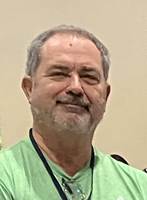 I'm also looking forward to 2026 because so many of you have
books that are almost complete and other goals you want to achieve. I look at
goals as a bar. The higher the bar, the loftier the goal. But,
there's always a but, if you set the bar too low, it's too easily
achieved and no effort is needed to accomplish it. If you set it so high that
it's unachievable, it goes the way of the resolution. However, setting the bar
just high enough that it takes effort to get over it, gives you opportunity to
build a ladder of experience one rung at a time to achieve your goal.
I'm also looking forward to 2026 because so many of you have
books that are almost complete and other goals you want to achieve. I look at
goals as a bar. The higher the bar, the loftier the goal. But,
there's always a but, if you set the bar too low, it's too easily
achieved and no effort is needed to accomplish it. If you set it so high that
it's unachievable, it goes the way of the resolution. However, setting the bar
just high enough that it takes effort to get over it, gives you opportunity to
build a ladder of experience one rung at a time to achieve your goal.
So 2026.
Let's make it a year of accomplishments, ladder building and success.
See you on the other side. (of the bar)
The Prez.
Nathan/Carl
FROM THE VP
Happy New Year, everyone!
A new year (2026) is upon us. For some, it’s a time for
reflection and for new beginnings—a do-over of sorts. Resolutions, or setting
goals, as some like to call them, abound. If you set some goals in 2025 that
are still not fulfilled, perhaps it’s time to reassess them. Another option is
to break it down into smaller goals. As a wise person once explained, “How do
you eat an elephant? One bite at a time.”
For our January 9th meeting, I have had several
requests to repeat a tutorial I did several years ago: How to set up your book
for printing in Microsoft Word. I hope it will be helpful to many of you. Word
is not as flexible as Adobe Illustrator, but it won’t cost you extra money and
a steep learning curve. Also, OpenOffice is another resource, a free download
that can substitute for Microsoft Word in most cases. Hopefully, it will work
for you. I will provide Dave with a handout of my
presentation for him to send out to everyone after the
meeting.
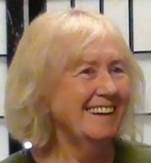 For our first Wednesday evening meeting, I would like you to
think about which topics you would like covered in this more focused, detailed meeting. There will be time
for questions and feedback, and I hope there will be participation from those
who attend. We planned this extra meeting a couple of years ago to attract
those who, because of their jobs, were unable to attend the Friday meeting. For
a little while, we got new people and a good response, but it faded over time,
partly due to organizational challenges and partly due to insufficient
publicity. We will give it another try this year, with the meetings taking
place on the third Wednesday of each month beginning at 6:00 pm here at Sans
Souci.
For our first Wednesday evening meeting, I would like you to
think about which topics you would like covered in this more focused, detailed meeting. There will be time
for questions and feedback, and I hope there will be participation from those
who attend. We planned this extra meeting a couple of years ago to attract
those who, because of their jobs, were unable to attend the Friday meeting. For
a little while, we got new people and a good response, but it faded over time,
partly due to organizational challenges and partly due to insufficient
publicity. We will give it another try this year, with the meetings taking
place on the third Wednesday of each month beginning at 6:00 pm here at Sans
Souci.
There are also a couple of things in our agreement with Sans
Souci that need to be mentioned. First of all, the
speed limit within the park is a strict 10 mph. Please respect this, as there
is a lot of pedestrian traffic here, and mostly people who can’t easily get out
of the way. Second, no animals are allowed in the Clubhouse. No exceptions. We
have a wonderful facility in which to meet, we have reserved our dates and
times for the entire year, and I would hate to lose the privilege over two
simple rules. Thank you for understanding.
I got some wonderful footage of our members reading their
selections at our December meeting. It is taking me more time to edit, but I
will send Dave the link to access it once it is finished and uploaded. Thank
you to everyone who participated, brought cookies, and listened.
I hope to see many of you at the January 9th meeting in the
clubhouse at Sans Souci West mobile home park, 3231 West Boone Avenue in
Spokane, Washington. The meeting begins at 2:00 pm, and the room is open at
1:30 for setup and pre-meeting visiting. The second
meeting of each month will resume in January on the third Wednesday of the
month on the 21st here at Sans Souci. The meeting begins at 6;00 pm,
with the room available for us at 5:30. During the winter, they lock the front
gate at 6:00, so be early if you can. If you get here and the gate is locked,
feel free to call me at (509) 499-2012 and we will get
someone up there to let you in. In the meantime, I hope you had a wonderful
holiday season with friends and family and are now ready to tackle 2026
together
Sue
Eller
FROM YOUR EDITOR, WEB-MASTER,
TREASURER
Happy New Year, everyone! I hope all had a
Great Holiday Season.
 As usual,
our December meeting was given over to an Open Mic session in which members and
guests shared examples of their work with us.
It’s always enjoyable to hear a little of what our fellow authors have
written.
As usual,
our December meeting was given over to an Open Mic session in which members and
guests shared examples of their work with us.
It’s always enjoyable to hear a little of what our fellow authors have
written.
For future open mic
sessions, I would suggest that if you are going to read something, that you time your presentation beforehand and see just how
long it takes. While we ask that
presentations be five minutes or less, I
don’t think anyone would complain if something stretched to five and a half or
six minutes, but if it stretches to much more than
that, you might want to shorten it a little.
Now is the time to pay dues for 2026. You can bring cash or check to a meeting, or
if I remember my Square card reader, you can use a
credit or debit card. As we move into January,
you can also send dues payments to:
Spokane Authors
2504 W. Walton Ave.
Spokane, WA 99205-1569

FROM THE PREZ (May 2025)
It is now officially May.
Today is May Day, next week, Cinco De Mayo. After that, Mother’s Day on
the 11th. The
18th, is Mount St. Helen's Day, and my Forty-fifth Wedding
Anniversary is somewhere in there...I think.
To cap off the month, Memorial Day.
Now a short recap of how we got here.
Spring sprung in March, April was a
very taxing month and tried from day
1 to fool us. However, we saw
many new faces in April, which is always a blessing, and we look forward to
seeing them again in May.
I am looking forward to a very playful summer, I hope you are
too. My son and I have five minibikes
running now, so we have a variety of crazy to choose from. I'm also hoping to get two more books
published this year and try and keep up with the garden. Ah...retirement.
The last thing in my letter today has been the greatest thing on
my mind lately. One of our members,
Marilee Hudon, is not doing well. Please
remember her in your prayers and if you can, send her a card. Dave will have her address or check the
latest roster.
See you all on Friday the 9th.
Your Prez.
Carl/Nathaniel
FROM OUR VICE-PRESIDENT (May 2025)
The meeting on May 9th will feature columnist and correspondent
Cindy Hval, who writes the Front Porch column for The
Spokesman-Review. She will talk to us about her book War Bonds: Love
Stories from the Greatest Generation and will speak about writing
nonfiction, biography, and memoir in general. The book tells the stories of 36
couples who met and married during or shortly after World War II. Published by
Casemate in February 2015, it is available on Amazon.com, Walmart, and can be
ordered from Barnes & Noble.
Spokane Authors’ May guest speaker meeting takes place on
Friday, May 9th at 2:00 p.m. in the clubhouse at Sans Souci West,
located at 3231 West Boone Avenue. Able-bodied and semi-able-bodied members are
encouraged to come early (around 1:30 or so) to help set up tables and to help
tear down after the meeting is over. Last month, we had such good attendance
that we had to set up more tables after the meeting was scheduled to begin.
(Note: it will be easier to put away extra tables after the meeting is over
than to set more up at the beginning. It’s good to see we are drawing in more
interest all the time.
The Saturday meeting at St. Francis of Assisi Catholic Church,
1104 W. Heroy Ave., has been cancelled for this month. Check our website at
spokaneauthors.org for updates and look for next month’s newsletter as well.
Lining up quality speakers for our Friday meetings takes a lot
of juggling of both our schedule and that of the speaker. However, I do have
speakers lined up for most of the spring and summer. Next month, member and
author T. Hammond will discuss editing and how we can prepare our manuscripts
for submission to an editor. In July, we will hear from Gena Bradford, who will
address the ins and outs of writing motivational books. For August, we will
hear from one of the members of the Rotary Club South, and I hope to have a
name and short bio soon. I don’t have anyone lined up beyond August yet but
stay tuned.
Sue
Eller
FROM YOUR EDITOR, WEB-MASTER,
TREASURER (May 2025)
I waited as long as I could, but I’ve finally started
to update the roster and the website to agree with those who are paid members
for 2025 and those who are not. You will
notice that the roster is slightly shorter than it was. I removed ten people who have not paid since
2022. Next, I’ll adjust the MEMBERS list
on the website, so it only lists current members. Simply put, there needs to be some advantage,
some reward for being a paid member of Spokane Authors. And you can’t say I don’t bug you about
paying your dues in a timely manner.
Remember, our membership year runs from January 1st to
December 31st of the current year.
We prorate dues for those joining during the yar.
At the same time, I realize that individuals may
have financial situations we are not aware of.
If that’s the case, simply let us know, we don’t need to know the
details, and we’ll make arrangements.
Once again, the group is not about money, but we do
need the money for ongoing operation. We
pay for a post office box, a web-site, and more.
Our Saturday meetings might be changing as far as
location. You may remember that the one
in March didn’t go as planned. We had
one in April, but because of the location change and it being Easter weekend,
attendance was very light. Hopefully,
we’ll have some word on future meetings at this month’s Friday meeting.
As always, you can send dues to:
Spokane Authors
P. O. Box 18573
Spokane, WA 99228-0573
Or bring cash or check to a meeting. (If I remember to bring my “Square,” you can
charge your dues to a card.)
Dave Mc

Page revised 01/02/2026
DAM
©2005 www.spokaneauthors.org